Solo travel no longer means a backpack and a bunk bed. More people are deliberately choosing to travel alone – not out of necessity, but as a conscious way to reset, break out of autopilot and reclaim their own pace. This piece is about why private space during a trip has become less of an indulgence and more of a legitimate recovery practice.
Why Solo Travel Has Become Its Own Category of Rest
Five years ago, solo travel was still seen as a fallback plan or something you did in your early twenties. That’s shifted considerably. Booking.com data shows that solo reservations among the 30 to 45 age bracket have nearly doubled between 2022 and today. But the numbers are less interesting than the reasoning behind them: People aren’t traveling alone because they have no one to go with — they’re choosing it intentionally.
From Hostel Dorms to Private Villas: How the Solo Traveller Has Changed
The contemporary solo traveller is more often a freelancer, mid-level manager, or founder looking not for new stamps in a passport but for actual recovery. The logic around accommodation has shifted accordingly – less about cutting costs, more about maximising space and quiet. For example, people are looking for a private villa, a pool to themselves and no shared walls. These aren’t luxuries in the traditional sense, they’re preconditions for rest that actually works.
One of the more practical formats gaining traction is a 1 bedroom villa Bali – an isolated setup with personal infrastructure, no hotel timetables to work around and no shared lounge to navigate. For a single traveller, it hits a clean balance between privacy and comfort, without the excess of something larger.
The Therapy of Space: What Happens When You’re Finally Alone
There’s a concept in neuroscience called the default mode network — the brain’s passive mode, which activates precisely when a person isn’t doing anything in particular. Not meditating, not listening to a podcast but just existing. Most people have been cut off from that state for years. A solo trip in a private setting is one of the few contexts where it restores itself naturally, without effort or intention.
Three Things That Shift During a Solo Trip
- Sleep quality. Without someone else’s schedule, light or sounds bleeding into the room, the body tends to recalibrate quickly. By the third night, most people wake up without an alarm and without that familiar low-level fatigue.
- Sense of agency. Even small choices (where to eat, which direction to walk) restore a sense of ownership over time. It sounds basic, but behavioral research consistently confirms that minor autonomy replenishes larger reserves of willpower and focus.
- Relationship with anxiety. It doesn’t disappear, but it changes proportion. What felt critical at home often looks different by day four – not because of any deliberate inner work, but simply because the context has changed.
Bali in 2026: What’s Worth Knowing Before You Go
Bali remains one of the more reliable destinations for solo travel — and for reasons that have little to do with its social media reputation.
The Visa Situation and Current Rules
Since 2023, Indonesia has offered a dedicated Digital Nomad Visa — the E33G Second Home Visa — valid for five or 10 years. For shorter stays, the more relevant option is the VOA (Visa on Arrival): 30 days for $35, with a single 30-day extension available.
The process has stayed consistent through 2025–2026, though it’s worth carrying rupiah in cash. The card terminals at the VOA desk in Ngurah Rai Airport are unreliable – they decline without explanation often enough that it’s not worth the risk.
Location Logic on the Island
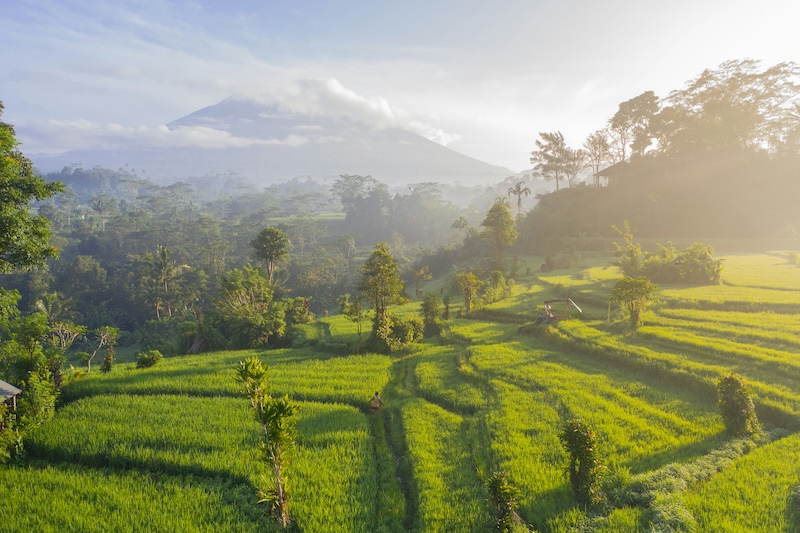
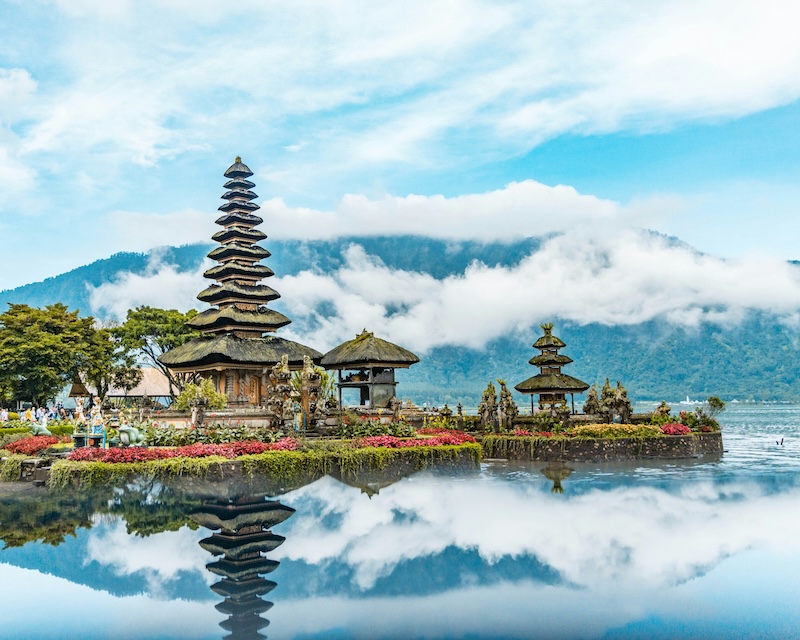
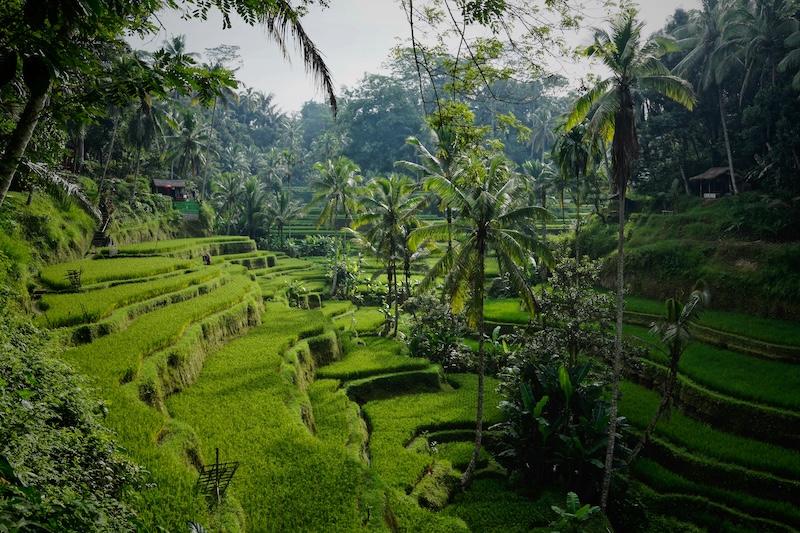
Every corner of Bali has a different character. Ubud means rice fields, morning mist, temples, and a dense ecosystem of wellness practitioners. Seminyak is restaurants, boutiques, and genuinely good sunsets over Petitenget Beach. Canggu is surfers, matcha cafés, and MacBooks.
For a solo trip oriented around quiet, the most effective choices tend to be villas outside the tourist centers — Pererenan, the northern coast, or the hills surrounding Ubud. The mornings there are different: no scooter noise from the street, no persistent “hello, transport?” outside the gate.
Uluwatu: Waves That Deserve Respect
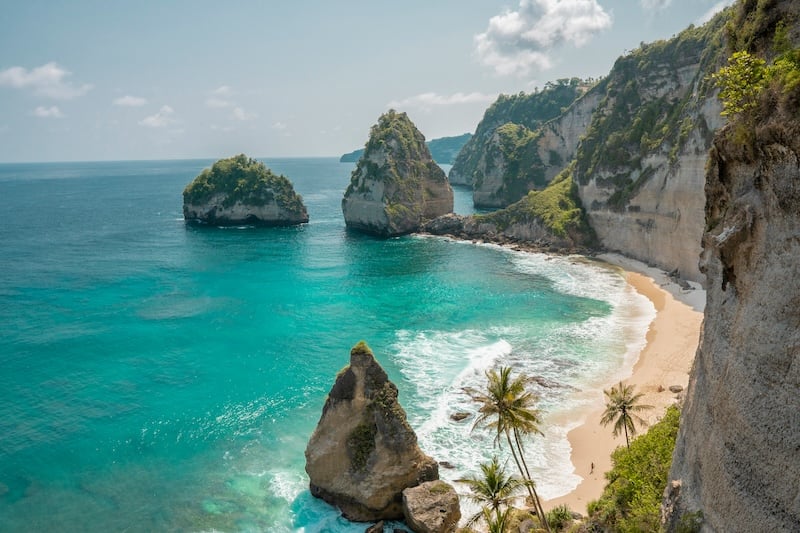
For anyone who surfs – or simply wants to see one of the island’s most striking locations – Uluwatu is non-negotiable. A few things are worth understanding before showing up.
Uluwatu is a left-hand reef break. It works well on a southwest swell in the 1.5m to 2.5m range, but once it pushes past six feet, it becomes significantly more demanding and less forgiving. The shore entry is sharp: the single channel through the cliff requires experience and full attention. Beginners are generally better off watching from Single Fin café – the view of incoming sets from there is just as striking, without the risk.
Local surfers consistently recommend getting in the water before 7 a.m., ahead of the charter groups from Kuta. After 10, the lineup gets crowded fast and the quality of any session drops noticeably.
Choosing a Destination for a Solo Trip
Picking the right place for solo travel isn’t about finding the most beautiful location – it’s about matching a place to a specific temperament and current state. A few things worth weighing before booking:
- Logistical simplicity. Fewer connections and a readable local infrastructure make adaptation easier. Bali, Lisbon, Chiang Mai, Tbilisi — cities where a solo traveler gets oriented quickly and without friction.
- Privacy level of the accommodation. A hotel provides service but rarely provides silence. A villa provides silence but requires more self-sufficiency. The choice comes down to what’s currently in shorter supply.
- Seasonality and local rhythm. Bali in August is a fundamentally different experience from Bali in April – not just in temperature, but in crowd density, pricing, and the general pace of the island.
Platforms like https://www.theyoungvillas.com/ make it possible to filter by bedroom count, location, and pool type — considerably more useful for a solo search than standard aggregators, where single-occupancy villas often don’t even appear as a distinct category.
Solo Travel Therapy: Your Own Recovery Point
A solo trip isn’t about finding yourself. The motivation is more straightforward than that: recovering the capacity to think clearly, feel something, and rest on your own terms. Private space in that process isn’t a detail – it’s the foundation. A villa without neighbors, a morning without someone else’s schedule, an evening without the obligation to hold a conversation — none of that is selfish. It’s maintenance.