
Enthusiasm gets you out the door. Proper gear gets you back. It’s that simple. Your equipment controls your safety and comfort. Good kit cuts down on risks and daily annoyances. It creates efficiency.
When your gear works for you, you can stop worrying and just experience the trip. Every piece you carry must earn its place. Choose with purpose.
Cutting Tools: A Core Element of Outdoor Readiness
All the clever gadgets in your pack are useless if you can’t even open them. A proper knife is the fundamental operator. Getting into high-end custom knives is a practical decision. It’s moving past stamped metal and unknown materials to something made for actual use.
You start to care about the Rockwell hardness, the full tang construction, and the subtle curve of the blade belly. This isn’t collector stuff. It’s about buying a decade of reliability, a tool that becomes a known quantity. One less thing to worry about when everything else is unpredictable.
Custom knives are about matching your specific needs. You get the right blade shape for your main tasks and a handle that fits your hand perfectly. It’s more efficient.

Backpacks: Carrying Comfort and Organisation
A backpack is your lifeline outdoors. It carries your water, your shelter, your food. Choosing one isn’t about brand names. It’s about function. Day trips require less space. Overnight trips require a lot more.
The critical element for big loads is the harness system. It must fit your body. The hip belt should carry most of the weight. Without that, your shoulders will be screaming by lunchtime.
Look for these things:
- Durable construction. Check the zippers and stitches.
- Padded contact points.
- A design that lets air flow between the pack and your back.
- Attachment points for gear you need to grab quickly.
- Weather resistance.
Try it with weight. Walk around. Make adjustments. If it doesn’t feel comfortable in the store, it will be worse on the trail.
Shelter Systems: Protection From the Elements
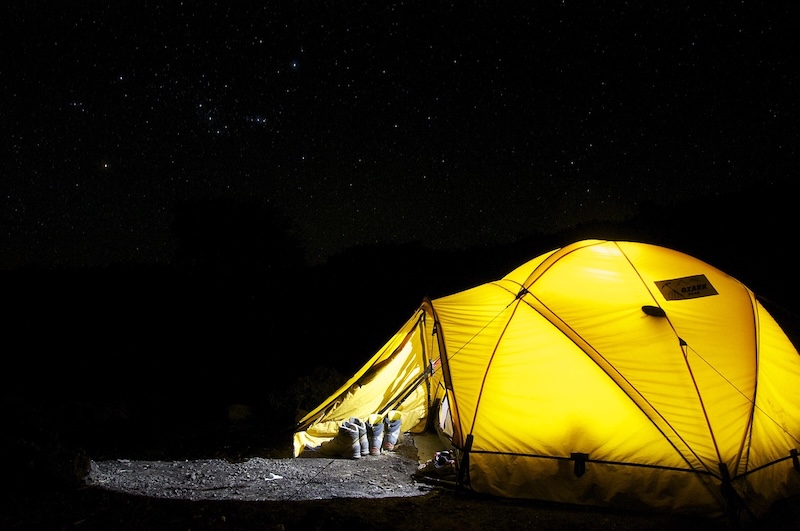
A good shelter is critical—exposure is a real threat. Tents offer the most complete protection. Choose a lightweight backpacking model for most trips, or a durable four-season tent for harsh weather.
Alternatives like tarps or bivy sacks save weight but demand more skill and offer less protection.
Your choice must suit the forecast, terrain, and your own experience. If you can’t set it up quickly in a storm, it’s the wrong shelter.
Sleeping Gear: Rest as a Survival Factor
Good sleep is critical for safety. A cold, exhausted mind makes poor decisions. Your sleeping bag must be rated well below the forecast—nights are colder. Down is warm and light but fails when wet. Synthetic is a reliable, damp-proof alternative.
Never skip a sleeping pad; the ground drains your heat. Even a basic foam pad helps immensely. In deep cold, layer two pads. Bring a pillow, even a makeshift one from clothes. Real rest keeps you sharp.
Clothing: Layering for Versatility
Outdoor dressing is about layers: a base to wick sweat, a middle for warmth, and a shell for protection. Never use cotton as a base—it traps moisture. Choose wool or synthetics instead.
Boots are vital. Match them to the trail and your load. A good fit stops blisters, so break them in first. Use proper socks and bring spares. Keeping your feet dry is key to comfort.

Fire-Starting Equipment: Heat, Cooking, and Signalling
Always bring a way to make fire, even with a stove. Waterproof matches, a ferro rod, or a reliable lighter are key.
Fire provides heat, cooks food, and can signal for help in an emergency. Pack some dry tinder too, especially in damp conditions. Always follow local fire rules.
Navigation Tools: Knowing Where You Are
All this navigation tech can make you forget one basic fact: You still need to know where you are. A map and compass don’t run on batteries. They’re your backup when everything else fails. So by all means, use the apps. They’re incredibly precise.
But your real skill should be reading the land itself, not a screen. Plan the route before you leave. Identify clear landmarks. Understand the terrain and know how you’d get out in an emergency. That preparation is what keeps you safe.
Cooking and Hydration Gear: Sustaining Energy
Your cooking system is a choice between speed and convenience. Gas stoves are fast and reliable. Wood stoves are slower and require you to find fuel. Your pot only needs to be durable. Choose titanium for lightness or aluminium for lower cost.
Water management has two parts: Carrying it and purifying it. Use bottles or a hydration bladder. You must have a filter or purification tablets for natural water sources.
Beyond these basics, gear choice is personal. Testing equipment to find what works best for you is the most of the process.
First Aid and Safety Essentials
Pack a small first aid kit so little problems don’t turn into big ones out there. Stuff to throw in:
- Bandages and adhesive tape;
- Antiseptic wipes or a small bottle of alcohol;
- Blister pads or moleskin;
- Ibuprofen or whatever painkillers you use;
- Any prescription meds you need daily.
Knowing how to clean a cut, spot signs of hypothermia, or handle a sprain matters more than the kit sometimes.
Other handy safety items:
- A bright headlamp with spare batteries;
- A loud whistle;
- An emergency blanket (those thin silver ones).
Double up on the really important things—like light sources or fire starters—so one failure doesn’t leave you stuck.
Conclusion
Pick gear for you, your location, and what you need to do. That’s the whole system. Quality gear works longer. Test it before you trust it. Every item in your pack must have a purpose.
Start with the essentials: a solid knife, proper shelter, clothing layers, and navigation you can count on. Without those, you’re just fighting your own kit. With them, you can finally just be out there.