
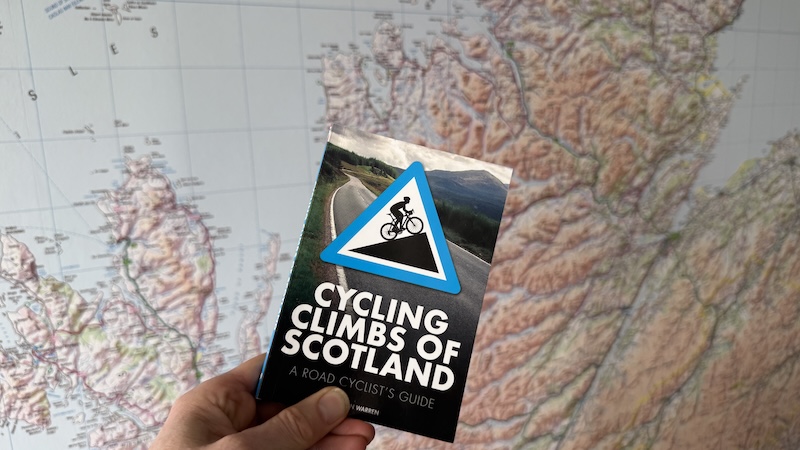
The new edition of Cycling Climbs of Scotland: A road cyclist’s guide has been refreshed and updated by the author Simon Warren. In Cycling Climbs of Scotland, Simon “crosses weather-beaten islands and snow-covered mountains on roads that demand respect and reward effort with breathtaking beauty.”
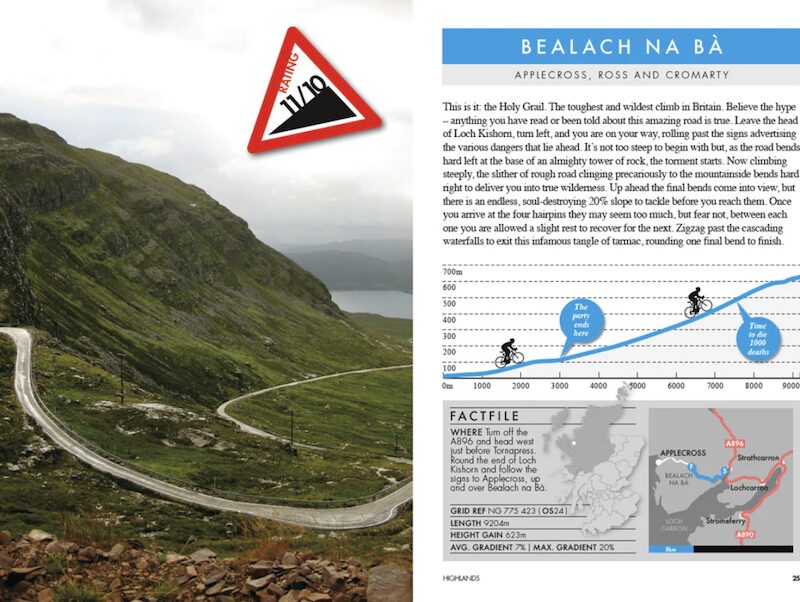
Routes are featured across the country, from classic climbs, such as the mighty Bealach na Bà in the Highlands and The short but wiggly Serpentine on the Isle of Bute, to lesser-known routes that are renowned by local riders but will be new to visitors.
The book includes great photography, updated stats and the latest information so that you can target the climb of your choice.
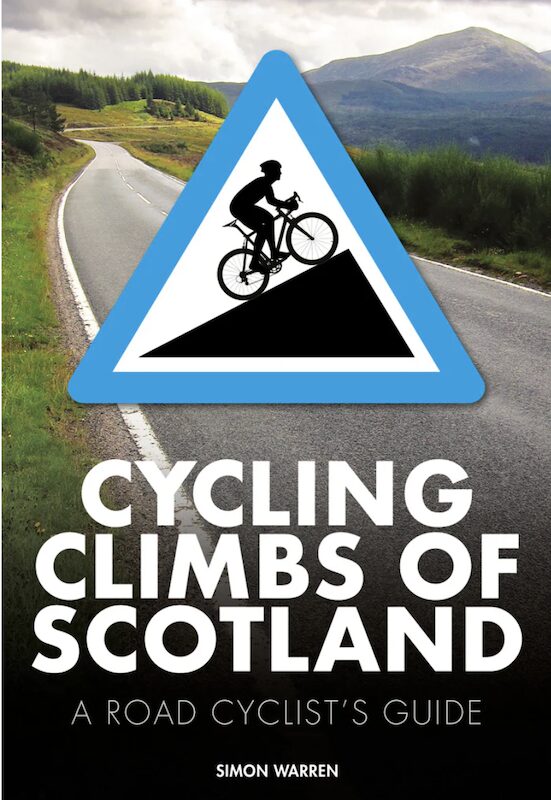
Who is the author of Cycling Climbs of Scotland?
Simon Warren has been obsessed with cycling since the summer of 1989 after watching Greg Lemond battle Laurent Fignon in the Tour de France. A few weeks later, he rode his first race, a 10-mile time trial on the A1 from Newark to Grantham and back, and was hooked for life.
Although not having what it took to beat the best, he found his forte was racing up hills, and so began his fascination with steep roads. After years in the saddle, up and down the UK, his quest to discover Britain’s greatest climbs resulted in 2010’s bestselling 100 Greatest Cycling Climbs, followed to date by a further 14 guides to vertical pain.
Covering the British Isles, Belgium, France, Italy and Spain, Simon has now been riding and
racing up hills and mountains for more than 30 years. He gives talks, guides rides, has written columns for magazines and, in 2020, he released his first book of cycling routes, Ride Britain. Simon, from Sheffield, splits his time between working as a graphic designer, running his 100 Climbs brand and spending time with his wife and two children.
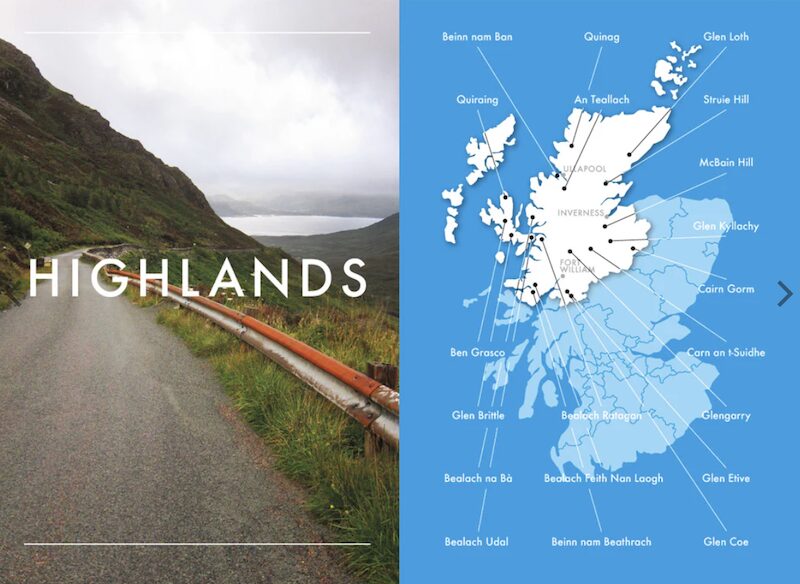
Simon says of Scotland
In the book, Cycling Climbs of Scotland: A road cyclist’s guide (second edition), Simon writes about his adventures in Scotland. I picked out a couple of sections that most resonated with me.
- “On quiet roads and under giant skies, you can ride beneath towering peaks, surrounded by nature and blissfully removed from modernity.”
- “The further north you travel, the more you feel the weight of the modern world lift from your shoulders; the air becomes fresher, the pace of life is slower, the roads are clearer and the weather is wilder.”
My thoughts: Cycling Climbs of Scotland: A road cyclist’s guide (second edition)
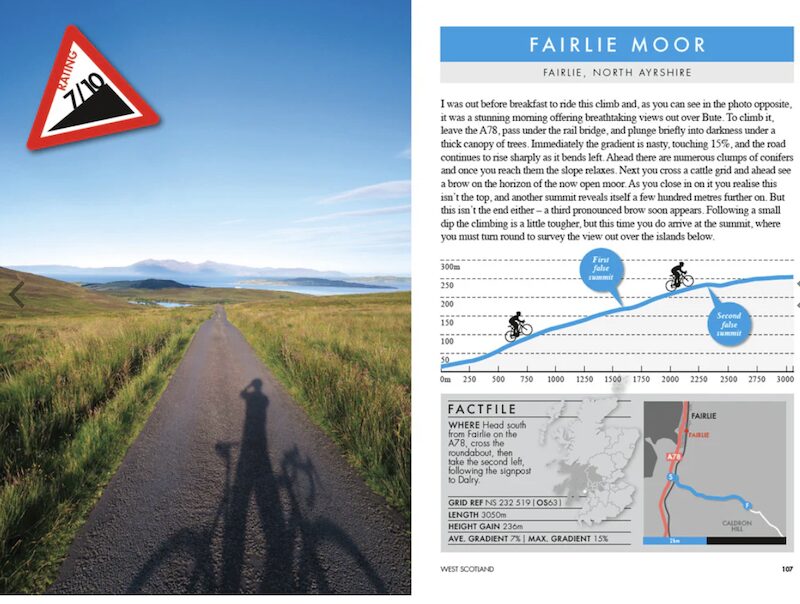
The book is a pocket size and easy to flick though. There is an introduction, which I enjoyed reading, a factfile and then some 60 climbs each detailing a short intro of what to expect, some graphs of the ascent, including gradients, a mark out of 10 for “challenge” and some other useful details.
As I go through the book, I recall some of the climbs I have done myself, some routes I have heard of but never completed and other climbs I didn’t even know existed.
There is plenty to keep even the keenest rider occupied for many weeks and the book has a useful checklist at the end should you want to tick off them all eventually.
For many riders, the book is likely to be the start of a plan to visit a new area, or areas, of Scotland.
Simon does give a bit of a warning about the weather because Scotland can face two to four seasons in one day, but that is all part of the challenge of riding your bike in some of the UK’s most remote and wild places.
Conclusion:
I’d recommend the book for road cyclists who likes to ride hills – and who are keen to visit new locations with their bike.
Cycling Climbs of Scotland: A road cyclist’s guide (second edition) is priced at £16.95 and sold by Vertebrate Publishing. It can be bought from Adventure Books. (I receive a small commission for book sales through this website. Thanks!)