
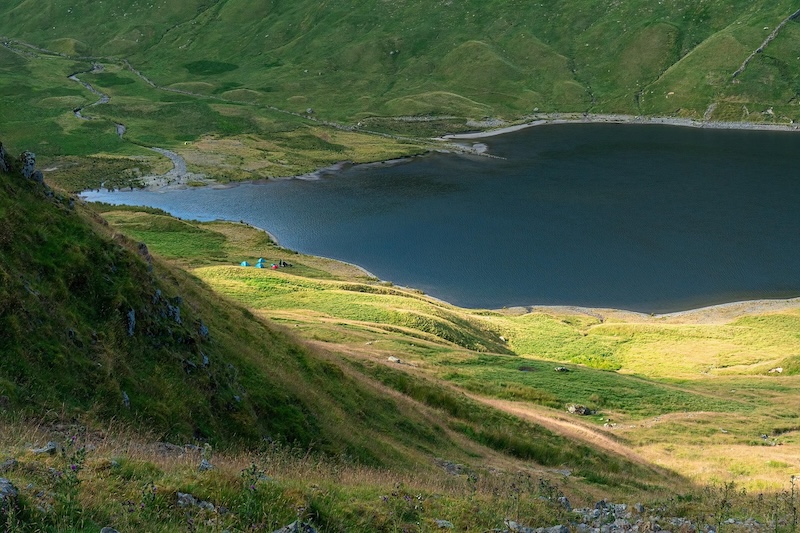
It is rarely comfortable. The ground is uneven. The temperature drops more than expected. The wind causes the tent to flap. And, yet, many of us sleep better outdoors than we do at home.
Ask anyone who has spent time in a tent, a bothy or a campervan and they will recognise the feeling. You wake early, often with the light. Your body feels rested, even if you stirred in the night. It is not luxury sleep, but it is deep in a way that feels hard to replicate indoors.
This is not nostalgia. There are good reasons why time outside improves sleep, and they say a lot about how far modern life has drifted from the conditions our bodies expect.
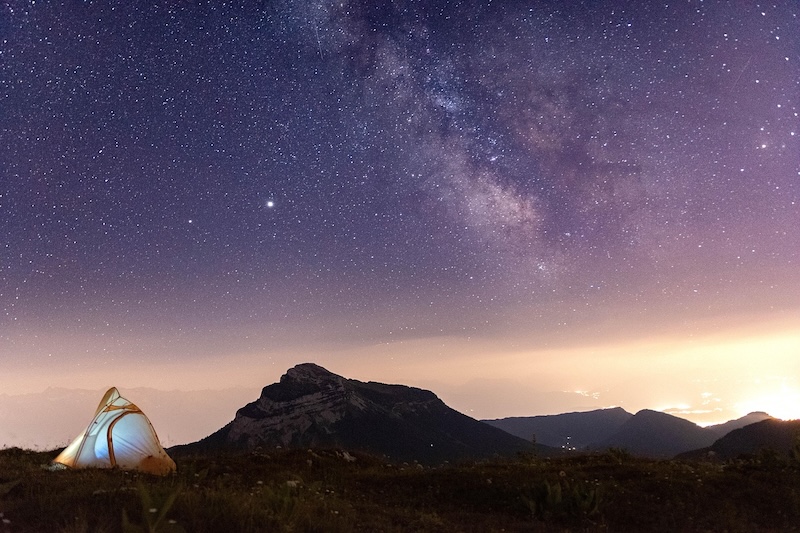
Natural light resets the body clock
The strongest influence on sleep is light. Not noise, not mattresses, not supplements but light. When we spend long days outdoors, our eyes are exposed to far more daylight than they ever are indoors, even on bright days. This helps reset circadian rhythm, the internal clock that tells us when to feel alert and when to feel sleepy.
In contrast, most indoor lives are dim during the day and artificially bright at night. Screens, overhead lights, and late evenings all delay melatonin release, making it harder to fall asleep.
Outside, the pattern is simple. Bright days. Gradual dusk. Darkness. The body responds quickly to that clarity.
Physical tiredness is different outside
Outdoor tiredness is not the same as the mental fatigue many people feel after a day at a desk. It is physical, honest, and easier to resolve.
Walking long distances, climbing, swimming, or carrying weight creates muscular fatigue that signals clearly to the nervous system that rest is needed. It reduces the mental restlessness that often keeps people awake, even when they feel exhausted.
You may still wake during the night in a tent, but falling back asleep is easier when the body has done what it was designed to do.
Fewer inputs, fewer interruptions
Outdoors, stimulation drops sharply. There are no notifications. No scrolling. No background television noise. Even conversation tends to slow as the evening comes in.
This matters more than most people realise. Sleep quality is not just about the hours spent asleep, but about how smoothly the body transitions into rest. Constant inputs delay that transition.
The outdoor evening tends to be repetitive and calm. Eat. Tidy. Sit. Watch the light fade. That rhythm is powerful, and it costs nothing.
Cooler air helps sleep
People often underestimate the role temperature plays in sleep. The body needs to cool slightly to initiate sleep, and cooler environments support that process.
Outdoor sleeping, even in summer, usually means cooler air, better ventilation, and fewer heat traps than most bedrooms. This is especially noticeable in tents or vans where airflow is constant.
It is not always comfortable, but comfort is not the same as good sleep. Slight coolness is often better than warmth.
Mental decompression matters
There is also a psychological shift that happens outside. Problems shrink. Decisions reduce. The day becomes simpler.
This mental decompression lowers stress hormones that interfere with sleep. Even one or two days away from constant demands can be enough to feel the difference.
Many people notice that they sleep better on the second or third night outdoors. That is often the point at which the nervous system finally stands down.
What outdoor sleep teaches us
The lesson is not that we should all sleep outside all the time. It is that the conditions that support good sleep are simple and largely absent from modern indoor life. More daylight exposure during the day. Less artificial light at night. Physical movement that actually tires the body. Cooler, darker sleeping spaces.
Outdoors, sleep tends to be pared back to the basics. Indoors, that same simplicity can be harder to find, especially in smaller homes, where the space around the bed matters. Something as straightforward as choosing single mattresses rather than oversized beds can change airflow, movement, and how contained a sleeping space feels, all of which can affect how easily the body settles at night.
The lesson is not about copying the outdoors perfectly. It is about paying attention to what it removes.
More light in the day. Less noise and light at night. Cooler rooms. Fewer inputs before bed.
Outdoor sleep works not because it is optimised, but because it is aligned.
That is why it feels so restorative, even when it is imperfect. It reminds the body how to do something it has always known how to do.
When we return indoors, the challenge is not to recreate the outdoors exactly, but to remember what it showed us. That sleep is not something to be engineered. It is something to be allowed.
And sometimes, the easiest way to remember that is to spend a night on the ground, listening to the wind, and waking with the light.