
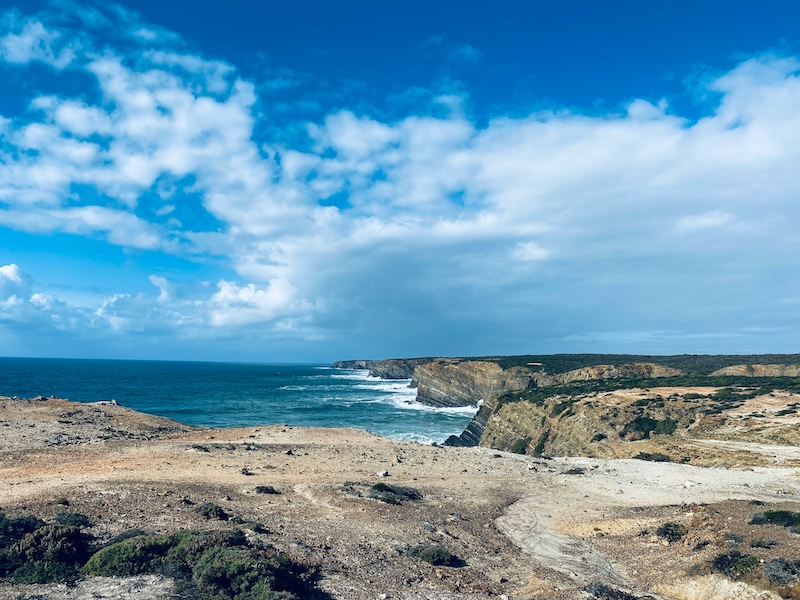
If you are looking for a destination for hiking in the off-season, Portugal’s south-western coastline could be a good plan. You can fly to Faro, then head south to join the Rota Vicentina, which features a network of hiking trails. Let’s find out more.
The Rota Vicentina in Winter
The Rota Vicentina is a network of walking trails in southwest Portugal, running roughly 450 kilometres between Santiago do Cacem and Cape St Vincent, the most southwesterly point of mainland Europe. It splits into two main routes: the Historical Way, which threads through a mix of landscapes, including cork oak forests and sleepy inland villages, and the Fishermen’s Trail, which hugs the Atlantic cliffs.
Most walking guides focus on spring and autumn. But January and February are arguably the best months. Daytime temperatures sit between 14 and 18C and the trails are nearly empty.
Wildflowers are already starting to show and the light – low, golden, Atlantic light that lasts until half five – makes every clifftop look like a film set.
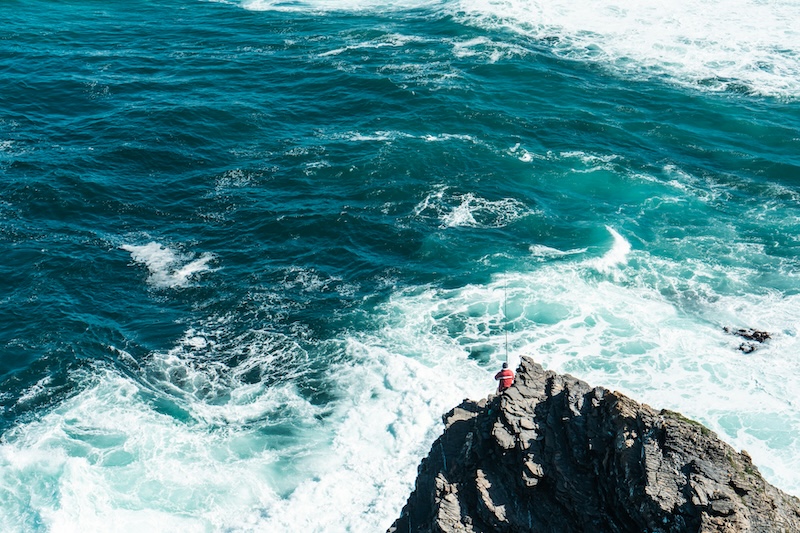
You could plan to start on the Fishermen’s Trail at Porto Covo and walk south for six days, averaging 20 to 25 kilometres a day. The terrain is varied enough to keep things interesting without being technical. Sandy paths along cliff edges give way to rocky descents to coves, then climb through scrubland before dropping to another beach.
What the Trails Actually Feel Like
The trail markings are excellent – green and blue stripes painted on rocks, fence posts, and the occasional tree. There is some rerouting, near Almograve, due to coastal erosion but it’s easy to find.
The surfaces alternate between hard-packed sand, loose coastal gravel, and stretches of boardwalk over sensitive dune areas. If you are used to Scottish hill paths, these are relatively forgiving on the ankles.
Trail hiking or trail running shoes will work well.
Accommodation is simple but available, with a mix of guesthouses and small hostels, booking one or two days ahead. In January, there is no need to reserve weeks in advance. A bed, a shower and a plate of grilled fish cost about €40 to €55 euros a night with dinner included. Several places have drying rooms for kit.
The Outdoor Community You Don’t Expect
A surprising number of people from Britain and northern Europe have settled along the coast Not retirees sitting by pools, but active people, including rail runners, surfers, yoga instructors andcycling guides.
Aljezur, a small town about 30 minutes from the coast, has become a quiet hub for outdoor professionals who relocated during, or after the pandemic.
For example, a couple from Edinburgh moved to a village near Odeceixe two years ago. They run guided walking holidays in the low season and surf the rest of the time. They mentioned that the process of setting up there was more straightforward than they had expected (a practical guide to foreign property purchases had been their starting point), though they said the bureaucracy still required patience and strong coffee.
The growing community of active expats is part of what makes the Alentejo coast feel different from the Algarve resort strip. It is quieter, less developed and the people you meet on the trails tend to be there because they genuinely want to be outdoors.

Practical Notes for Scottish Walkers
- Fitness level: If you can handle a full day on the West Highland Way in autumn conditions, you will find the Rota Vicentina comfortable. The elevation is modest – the biggest climbs are 150 to 200 metres – but the daily distances are longer than most Scottish day walks.
- Kit: Leave the waterproofs at the bottom of your pack as a just in case item. Bring sun protection instead – the coastal wind disguises how strong the sun is, even in January. A buff and a lightweight windproof are more useful than a hardshell.
- Getting there: Ryanair flies direct from Edinburgh to Faro. From Faro, local buses connect to most trail starting points, though a hire car gives more flexibility for reaching inland trailheads.
- When to go: January to March for quiet trails and mild temperatures. April and May for wildflowers but more company. Avoid July and August – the heat makes long walking days unpleasant and the coastal towns fill with summer tourists.
- Budget: Budget on around €450 for 10 days, excluding flights. This covers accommodation, meals and a few bus transfers. Portugal can be considerably cheaper than the Scottish Highlands for walking holidays once you factor in the accommodation savings.
Kit That Worked
- Inov-8 trail shoes, such as Roclite 290 – reliable on mixed terrain, dried overnight
- Osprey Talon 22 daypack – just enough capacity for layers and water
- Rab Microlight Alpine jacket – used as evening insulation, never needed on trail
- Buff merino wool headband – blocked coastal wind without overheating
- Compeed blister patches
The off-season is not off-limits if you choose the Rota Vicentina. Sometimes the best walking happens when everyone else is waiting for spring.