
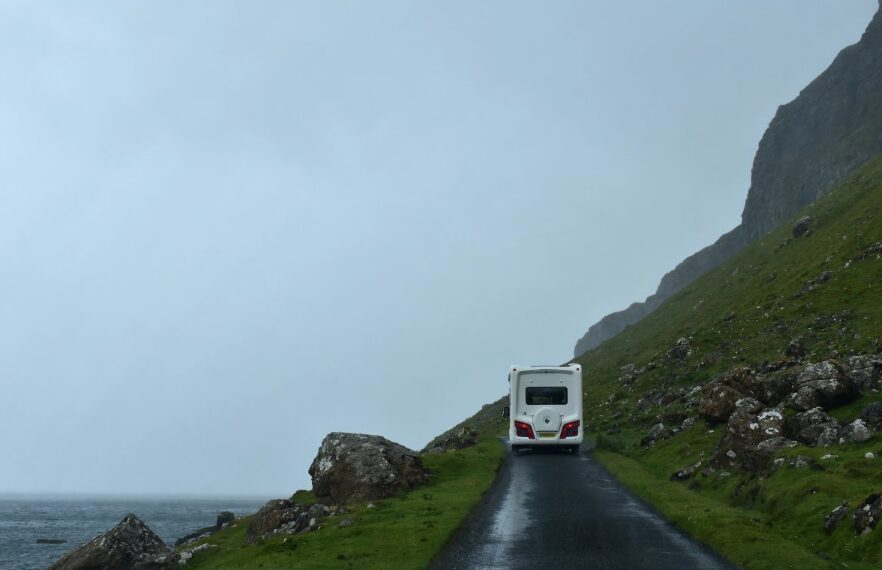
Scotland has always attracted adventurers – and with good reason. The amazing wildlife, cinematic vistas and opportunities for cycling, hiking, swimming and more, all make this a fantastic place to push yourself to the limits.
However, the North Coast 500, once a whispered secret among seasoned road-trippers, has become a victim of its own success. In its place, travellers are now turning their steering wheels southward, toward the South West Coastal 300 (SW300), the North-East 250 and the Kintyre 66, in search of emptier roads and quieter pitstops.
It’s easy to see the appeal. These alternative routes offer the same otherworldly landscapes you’d expect from the Highlands, but without the bumper-to-bumper traffic. Here, the roads actually feel like they belong to you again.
With all these routes, you’ll discover a mix of easier and wider roads to drive, as well as some singletrack and steeper inclines. Just as packing the right kit is essential for a successful off-grid trip, having the right vehicle is also vital, especially on this route.
The definitive vehicle checklist
If you are at the beginning of your journey, Out and About Campers have a comprehensive guide to planning a conversion, which is a great starting point; it helps you navigate the complex decisions that define how a van performs in the wild. Your choice of vehicle matters more on these rugged coastal routes than almost anywhere else.
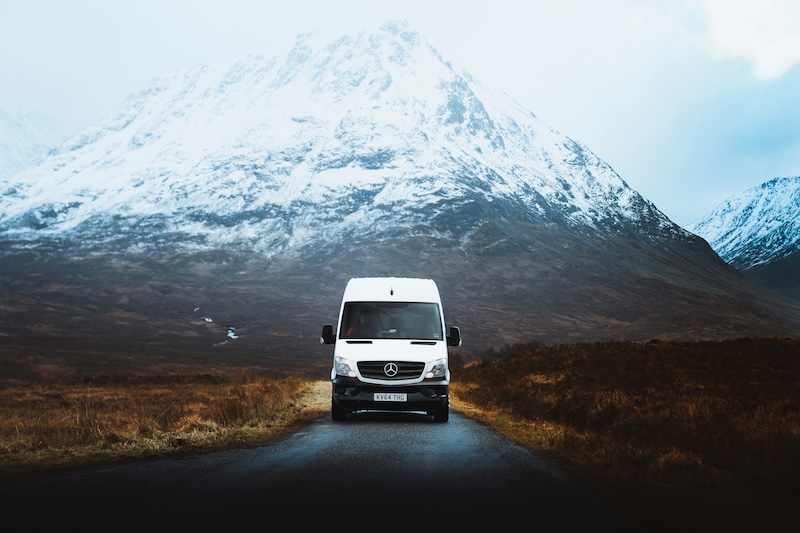
Choosing a Short Wheelbase (SWB) versus a Long Wheelbase (LWB) comes down to geometry as much as preference. On the tighter sections of the Kintyre 66, a standard LWB panel van conversion will negotiate most bends, but only with precise positioning. The margin for error narrows considerably when you factor in oncoming traffic on single-track roads. Purpose-built SWB campervans simply “survive” these roads better, offering the agility needed for hair-pin turns and narrow passing places.
Mastering Off-Grid Power
The second critical feature is your ability to go “off-grid.” This means having a power system capable of running your appliances without needing to plug into a campsite’s electrical hookup (EHU).
Because these routes have some sections of more limited infrastructure, you should budget for a minimum of 72 hours of full self-sufficiency. To achieve this, your setup should ideally include:
- A Dual-Battery System: Using a leisure battery to power the living quarters so you don’t drain the engine’s starter battery.
- DC-to-DC Charging: This charges your leisure battery while you drive which is essential for moving between coastal spots.
- Solar Supplement: At least a 200W roof-mounted solar array to keep the levels topped up during the long Scottish summer days.
Heating for the ‘shoulder season’
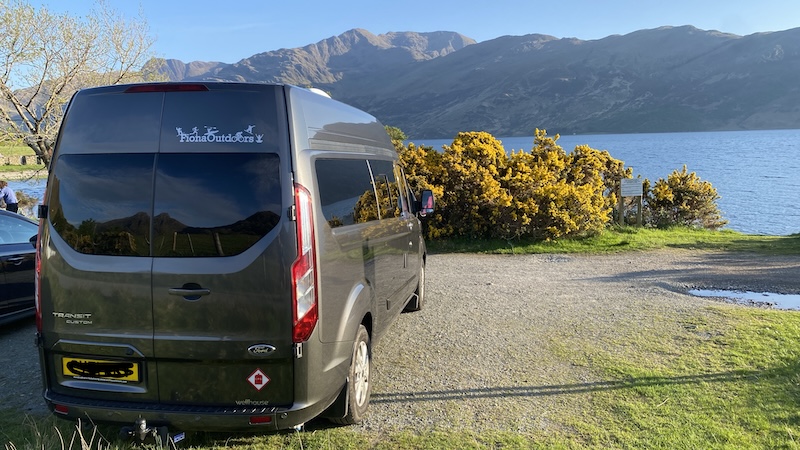
In the shoulder season and autumn, when there’s less light and your need for a warm place to rest for the night increases, the calculation for van life changes. For these damp, salt-heavy coastal environments, diesel heaters are the gold standard. When properly installed and vented, these units draw fuel directly from the vehicle’s main tank to provide dry, consistent heat. This doesn’t just keep you warm; it actively combats the internal condensation that can plague DIY builds in the Scottish climate.
Wild camping essentials
Wild camping is common along these routes, and while you won’t be battling a tent, specific van features can make the experience smoother. When designing your campervan, ensure you have dedicated storage for these “safety essentials”:
- Power & Light: A high-capacity power bank, head torch, and spare batteries.
- Vehicle Recovery: Jump leads, a portable jump starter, and a tyre puncture repair kit.
- Utility: A sturdy windbreak for cooking outside in coastal gusts.
Route comparison: Terrain and requirements
The NC500 has earned its reputation for technical driving primarily through elevation. For example the Bealach na Bà pass in Applecross (which has a road sign that advises against caravans and inexperienced drivers) climbs to over 620m via a series of hairpin bends. The gradients here are severe and the drop-offs unguarded, but the road surface is at least consistent. This route’s popularity means infrastructure has had to catch up, so fuel, waste disposal points, and emergency services are now rarely more than an hour away.
The SW300 and Kintyre 66 offer a different kind of challenge. Elevation is less of a concern here, but you’ll find plenty of single-track sections, and the coastal nature of these roads means constant exposure to salt-spray. Add in navigating through coastal villages and you need to be able to reverse with confidence and read narrow stone-walled lanes with a calm that only comes with practice or a very short vehicle.
Scotland’s coastal fringes are extraordinary, often feeling like a wild, untouched frontier just waiting to be discovered. However, to truly immerse yourself in these landscapes, you need a vehicle that is as resilient as the terrain. Choosing a campervan built for self-sufficiency and agile enough for the single-track roads is the key to unlocking these routes. When you plan the right way and equip your van for the reality of the Scottish elements, you aren’t just taking a road trip, you’re gaining the freedom to wake up to a different Atlantic sunrise every morning. It is, quite simply, the experience of a lifetime.